Grafton School Mural by artists Kade Valja & Deb Taylor
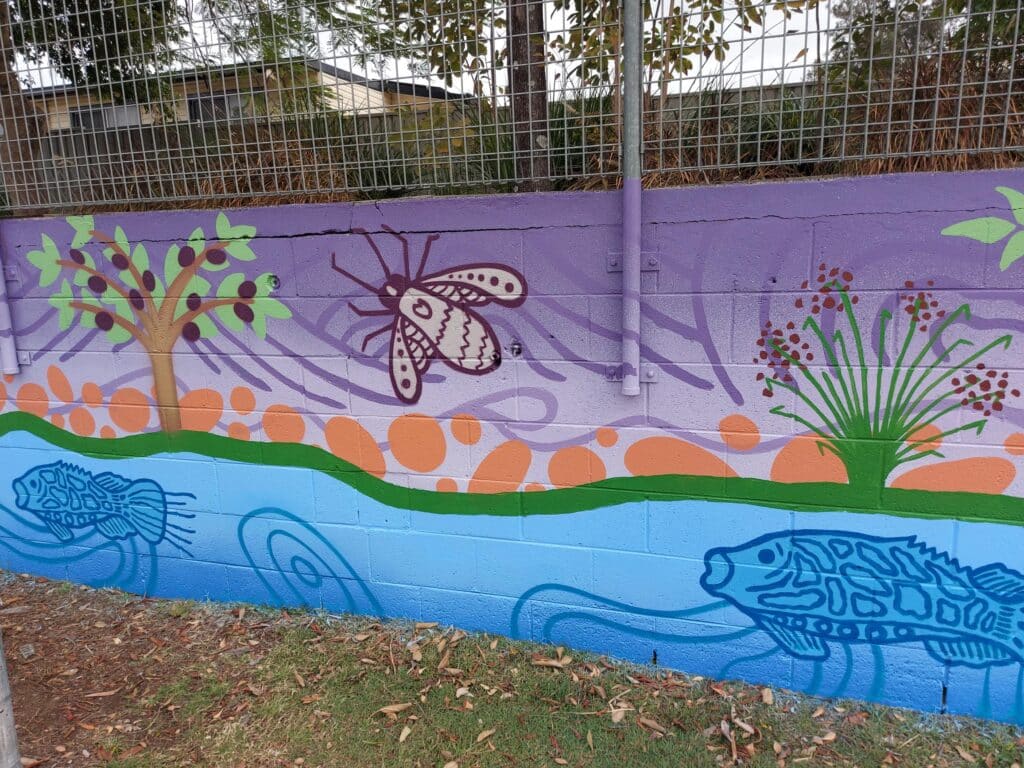
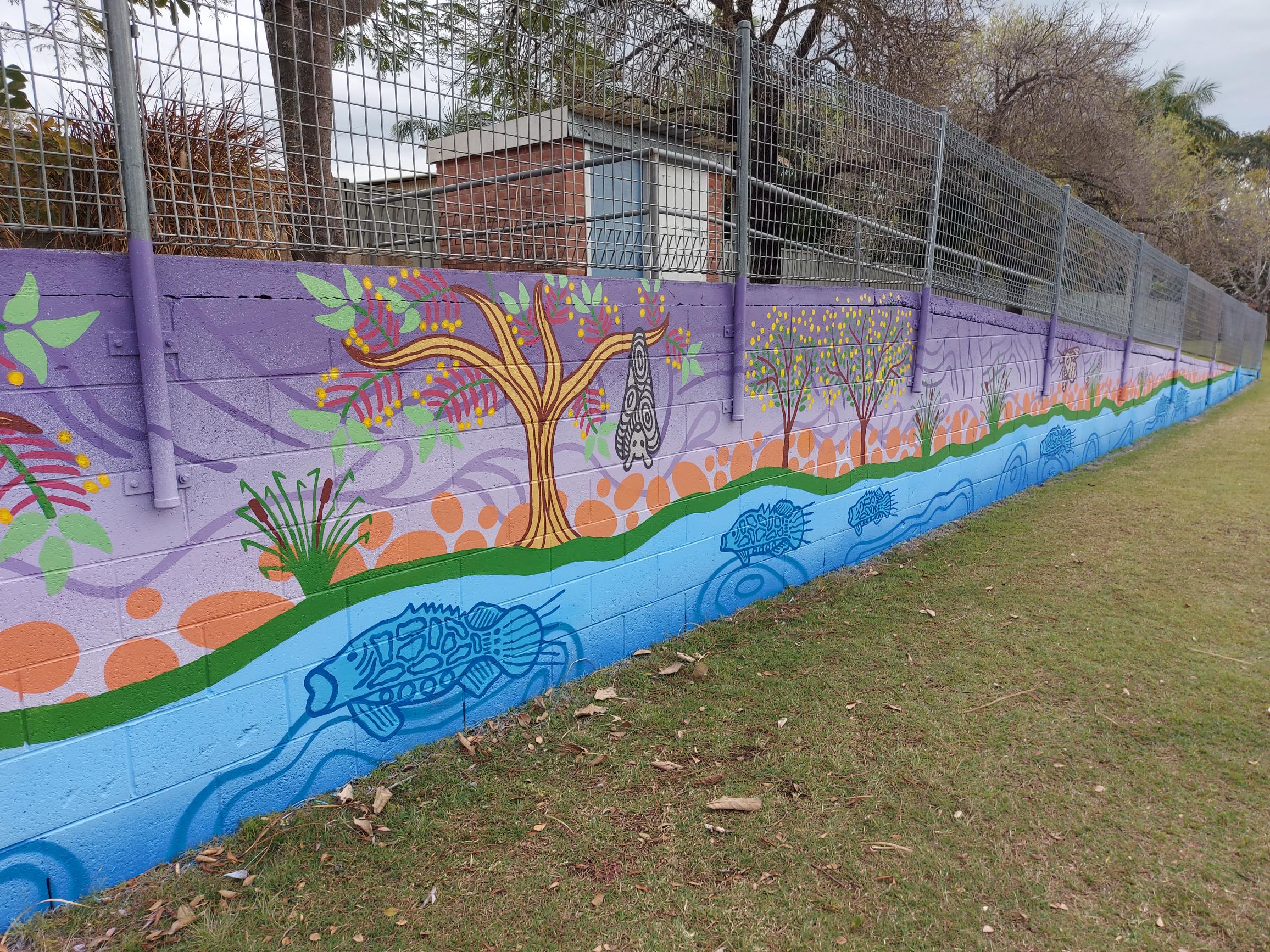
features plants & animals of the local region
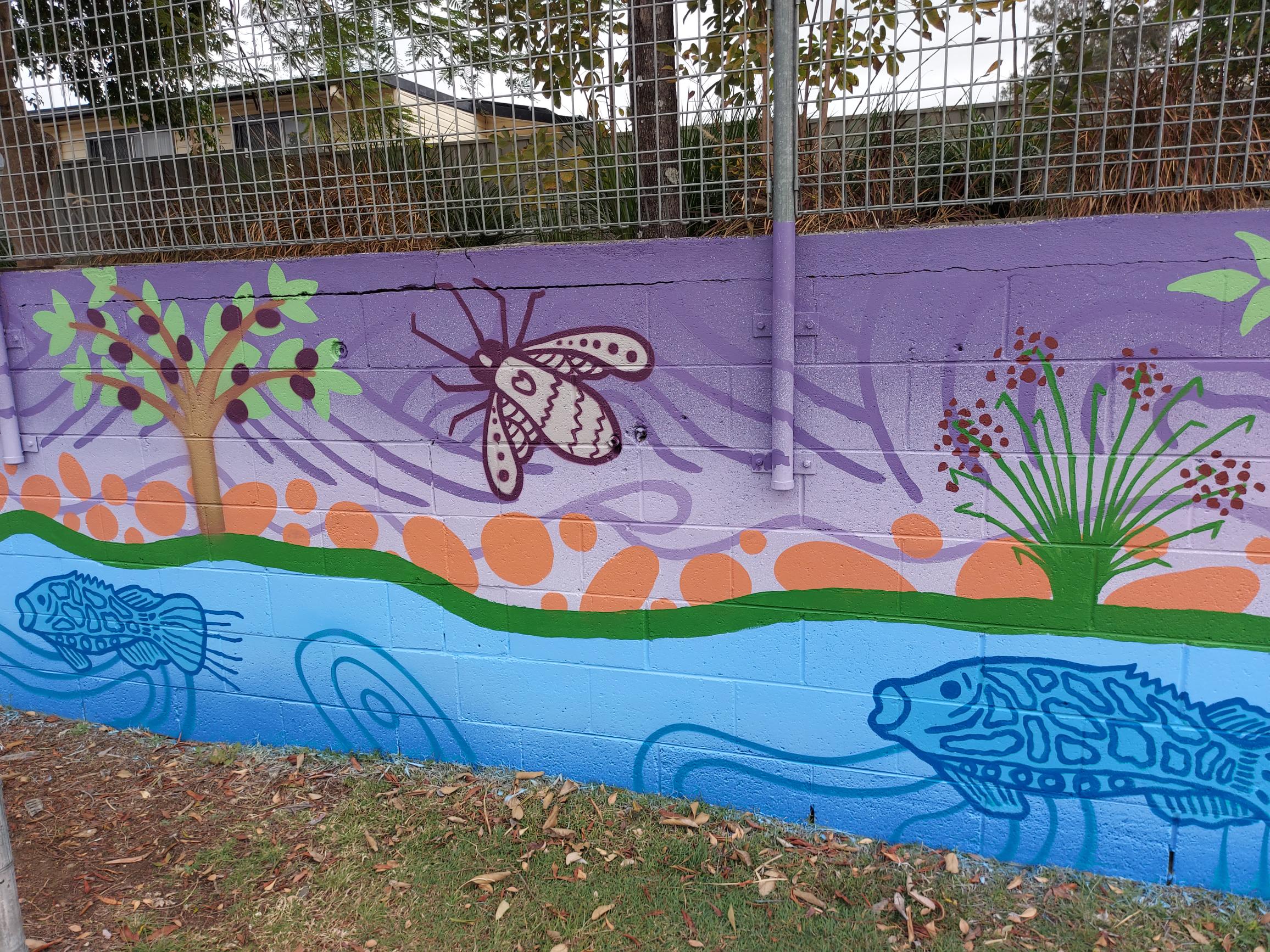
Kade Valja is a multi-disciplinary artist from Grafton (Northern NSW, Australia) who explores interests in organic form and nature using PERMACRYLIK scenic paints. Kade collaborated with Grafton artist Deb Taylor on a commissioned project, to paint a beautiful mural at South Grafton Primary School representing flora and fauna of the local region. The mural was painted using PERMACRYLIK Lightfast paints: mural paints designed for outdoor locations that are subject to sun and rain.
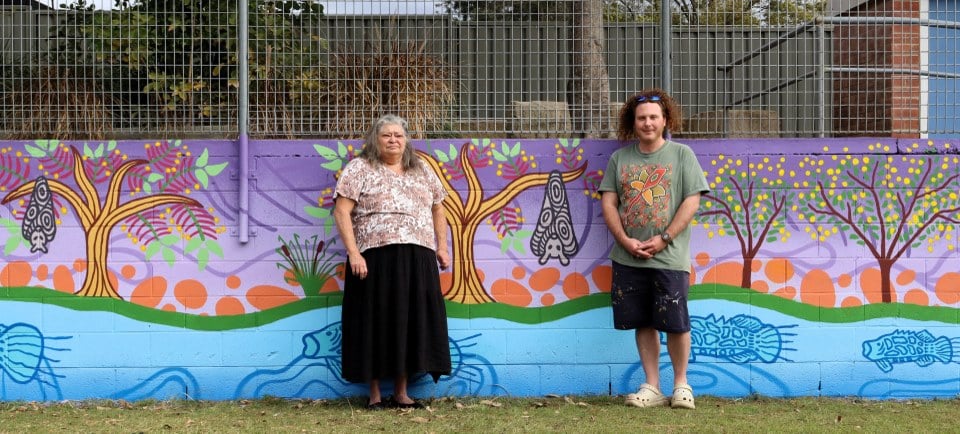
Artist statement: Deb Taylor
South Grafton sits at the northern end of the Gumbaynggirr Nation in our language it is called “Banggligan” the word “banggi” means to fly and tag (gan) at the end gives it a feminine meaning.
“This is a special place and is part of the Valley and sits on the mighty Clarence River, surrounded by hills and mountains. This landscape even now is rich and diverse but is always under threat. Kade and I were in agreement to represent some of the special trees and animals in showing them their Gumbaynggirr uses as well as being symbiotic to the welfare of a healthy environment.”
The Background of the Mural
The background of the mural represents the landscape of South Grafton which is the Clarence River and the surrounding hills and mountains of the Gibraltar Range that is visible from the school. The artists chose colours that would complement the imagery on top of the landscape.
Flora and Fauna.
After discussion, the artists decided to highlight some plants and animals that they felt represented the local environment.
Sandpaper Fig. “ gaaguny”.
The sandpaper fig was eaten raw or made into paste and then mixed with honey and water to eat. Medicinally it was used to treat insect bites. Also to treat eczema, the skin was rubbed raw by the leaves and a salve made from the stinking passion flower which was rubbed on. The sandpaper fig sap was also used to treat wounds.
The rough sandpapery texture of the leaves was used to rub off tools and polish wooden items including spears coolamons. Straight branches were used as fire starter sticks and string could be made from the bark of these trees.
Wattle. “Gunayjin”.
The wood from the wattles was used to produce spears, boomerangs, club shields, coolamons and digging sticks.
Bottlebrush Tree. “ munimga”
The artists decided to include the bottlebrush because of its beautiful blossoms. Bottlebrush provide a morning drink for humans who would suck the dew and nectar from the flower. They are also an important a source of pollen for bats, birds and bees who eat and spread the pollen and nectar to other trees.
Lomandra
Lomandra leaves were used for weaving baskets, bowls, mats and roofing. The tubers could also be eaten and were said to taste like green pees! In spring when the seeds came on they were also edible. When they turned brown were heated and then ground into flour.
Bullrushes “bunday”
From October to January, new shoots emerge from the base of the bullrush plant. The soft white part of this shoot is edible. In April and May the shoots produce yellow pollen which is shaken and collected to make flour. The brown white fluff from the flowering spike can be used to dress wounds and the watery sap has been used as protection against leeches.
Bees “dungaar”, Fruit Bats “balawirr”
According to the artist Deb Taylor, these animals are the best pollinators of all our plantlife in the world. They ensure all plants and trees that are food sources for humans, are pollinated, supplying humans and animals with food.
Clarence River Cod
This native fish was on the verge of extinction from overfishing. In the 1980s, extreme efforts were made by the fisheries facility in Trenayre Road. These efforts were successful in saving this magnificent fish.
Why PERMACRYLIK/PERMACRYLIK Paints?
Kade Valja began his practice painting walls and they still remain his most enjoyable canvas. As a born scavenger, at age 12, Kade started using scrap house paints that he found on council pick-up piles and at the local tip. He gradually learnt more about paint on a chemical level, testing out many types and different qualities of the paints that he found. After some years of foraging, he was able to start buying paint and found his favourites. With a burgeoning reputation came some successful commission work, and from that the funds to go to the local art store to see what was available. This is where he found his first few 1 litre tins of PERMACRYLIK scenic paint. Enchanted by the quality of colour, the beautiful matt finish and the longevity of these paints, the PERMACRYLIK range became Kade’s favourite to use, both inside and outside the studio.
Find out more about the PERMACRYLIK Scenic Range for murals here
Subscribe to get the latest inspiration, news & advice direct to your inbox
More articles
 @imearthie
Clothing label I’m Earthie shares how they strive to be a truly sustainable brand
Clothing label I’m Earthie shares how they strive to be a truly sustainable brand